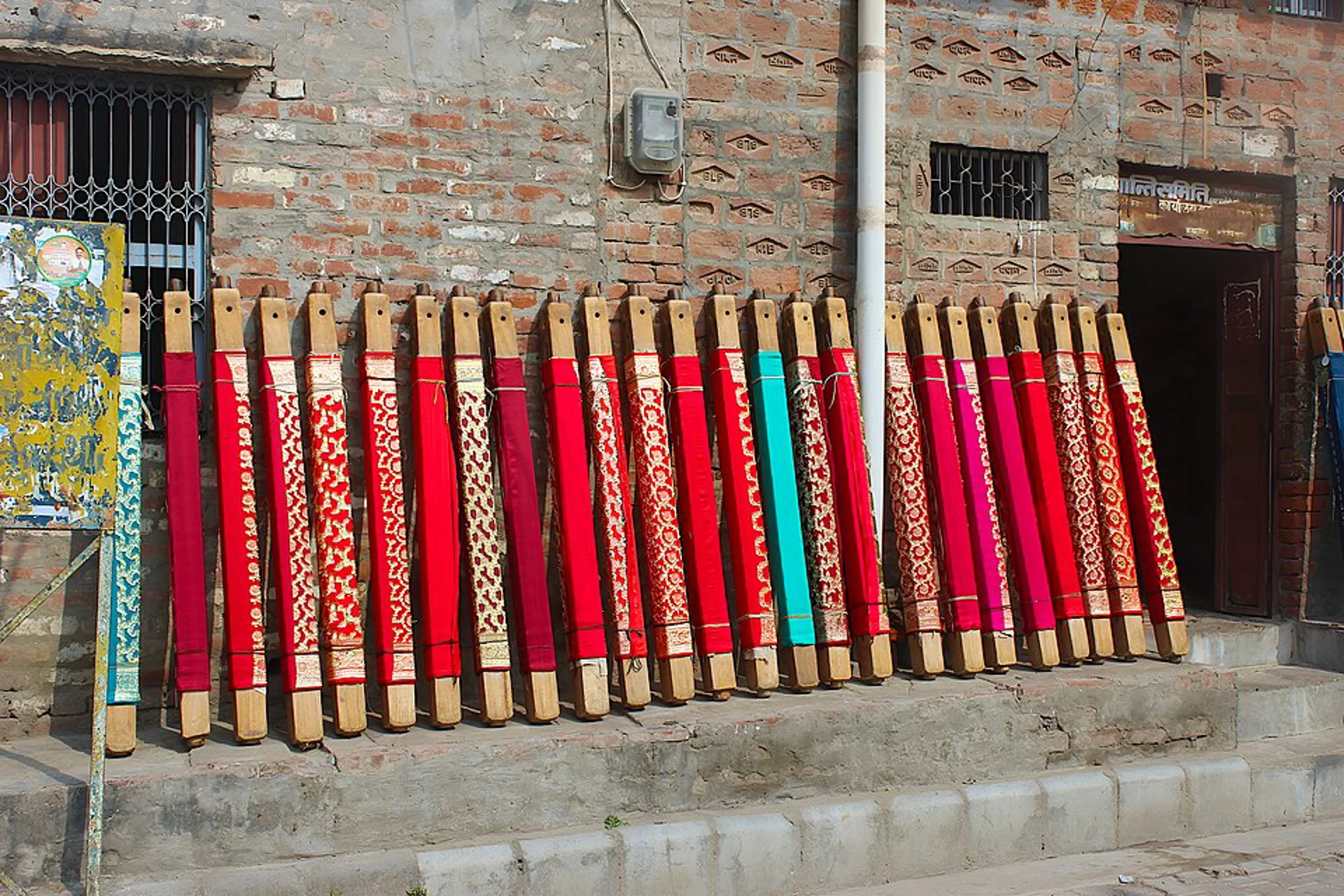
बनारसी साड़ी — सम्पूर्ण गाइड
Banarasi Saree — A Complete Guide
🌺 Banarasi Saree — A Thread of Eternity
Woven by master craftsmen for centuries, the Banarasi saree represents the pinnacle of Indian textile artistry. From royal Mughal courts to modern celebrations, these silk masterpieces continue to embody grace, tradition, and timeless elegance.
Types of Banarasi Sarees
Each variety represents unique weaving techniques, fabric compositions, and artistic expressions perfected over generations.
Katan
Pure silk with finest lustre, pure zari work. Most luxurious and expensive variety.
Organza/Kora
Lightweight blended fabric with silk and synthetic. Perfect for summer occasions.
Georgette
Soft, draping fabric with elegant zari patterns. Comfortable and affordable.
Shattir
Sheer fabric with intricate silk and zari borders. Delicate and sophisticated.
Jangla
Dense floral motifs covering entire saree. Rich, elaborate patterns throughout.
Tanchoi
Woven pattern with contrasting colors and zari. Complex jacquard work.
Cutwork
Intricate open-work designs creating transparent patterns. Lightweight and airy.
Butidar
Scattered small motifs (buti) across saree. Beautiful pattern variation.
The Sacred Weaving Process
From design conception to final inspection, each Banarasi saree undergoes a meticulous creation process that can span months.
Design (Naqsha)
Master designers create intricate patterns on paper, coded into jacquard looms for precise execution.
Silk Dyeing
Pure mulberry silk dyed in rich colors using traditional methods and natural dyes.
Warp Preparation
Thousands of silk threads arranged on loom in precise order, forming saree foundation.
Jacquard Weaving
Master weavers operate traditional looms, interlacing silk and zari threads over days or months.
Finishing
Sarees carefully cut, edges hemmed, pallu finished with zari and silk work.
Quality Check
Each saree inspected for weaving perfection, zari quality, color consistency, and authenticity.
Authentic vs Counterfeit
Learn to distinguish genuine Banarasi sarees from imitations with these expert identification methods.
| Test Method | ✓ Authentic Banarasi | ✗ Fake/Imitation |
|---|---|---|
| 🔥 Burn Test | Burns like burnt hair with powdery ash. Pure silk has distinctive organic smell. | Burns like plastic with melting beads. Chemical smell. Forms hard residue. |
| ⚖️ Weight & Feel | Heavy and substantial due to quality silk and zari. Cool to touch, smooth texture. | Lighter and synthetic feeling. Plasticky texture. Warms quickly in hand. |
| ✨ Zari Quality | Maintains golden shine. Wrapped around copper core. No discoloration when rubbed. | Dull appearance. Flakes or reveals red/green/plastic base when rubbed. |
| 🏷️ GI Tag | Official GI tag with registration details and authenticity certificate. | Missing GI tag or has fake/poorly printed tags. No authenticity certificate. |
| 🔍 Back Side | Floating threads and uneven cuts visible. Shows handloom weaving marks. | Perfect smooth back. Machine-like precision. No floating threads. |
| 💰 Price Range | ₹8,000 minimum for simple pieces, ₹50,000+ for pure katan and bridal sarees. | Too good to be true: ₹1,000-3,000 for "silk" sarees. |
From Mughal Looms to Modern Wardrobes — A Short History
Kashi has been a weaving city for as long as it has been a pilgrimage city — ancient texts praise the fine "Kasika vastra" (cloth of Kashi) centuries before the first Mughal loom was strung.
The Banarasi saree as we know it took shape in the 16th and 17th centuries, when Mughal patronage brought Persian design vocabulary — trailing vines, floral sprays, hunting scenes — to the pit looms of Banaras. Tradition holds that master silk weavers migrating from Gujarat in the 17th century strengthened the craft further. Over generations the Ansari weaving families of neighbourhoods like Madanpura and Alaipura perfected the kadhua and cutwork techniques that still define the trade. Today the weave is protected by a Geographical Indication (GI) registration — "Banaras Brocades and Sarees" — granted in 2009 and covering six districts: Varanasi, Chandauli, Jaunpur, Ghazipur, Bhadohi (Sant Ravidas Nagar) and Azamgarh. A saree woven outside this belt cannot legally be sold as Banarasi.
Classic Motifs to Look For
Buti & Buta
Small (buti) and large (buta) repeated floral sprigs scattered across the body — the most recognisable Banarasi signature.
Jaal
A continuous net-like lattice of vines covering the field, prized in bridal katan sarees.
Bel
Running creeper borders along the selvedge — Persian in origin, now thoroughly Banarasi.
Kalga / Paisley
The mango-shaped paisley, often anchoring the pallu's corner compositions.
Jhallar
An ornamental fringe of upright leaves or tassels finishing the inner border.
Shikargah
The rare "hunting-scene" jangla filled with animals and birds — a collector's motif.
Where to Buy in Varanasi (2026)
Every second shop in the old city claims to sell "pure Banarasi". These are the places where the claim is most likely to be true — from bazaar lanes to the weavers' own doorsteps.
Vishwanath Gali & Godowlia
The lanes around Kashi Vishwanath temple are lined with saree shops — convenient and atmospheric, but tourist-priced. Bargain firmly and insist on a burn-test swatch or Silk Mark.
Chowk & Thatheri Bazaar
The traditional wholesale heart of the saree trade. Old family firms here sell to retailers across India; prices are sharper and the ranges deeper than in the temple lanes.
Madanpura & Pilikothi
Historic Ansari weaver quarters. Buying directly from a weaving household means the fairest price for the maker and often a chance to watch your saree's twin still on the loom.
Sarai Mohana
A dedicated weavers' village on the city's edge within the GI cluster — several cooperatives welcome visitors for loom tours and doorstep sales.
Deen Dayal Hastkala Sankul
The government Trade Facilitation Centre at Bada Lalpur combines a crafts museum with fixed-price stalls run by certified weavers — the safest first stop for nervous buyers.
Government Emporia
UP handloom emporia and Weavers' Service Centre outlets sell certified pieces at fixed prices — no bargaining thrills, no counterfeit risk.
Planning a bigger shopping day? Pair this guide with our Silk Sarees & Shopping in Varanasi guide and the full Shopping in Varanasi pillar — markets, brassware, gulabi meenakari and more.
Smart-Buyer Checklist
- Ask for the GI tag or Silk Mark — certified shops will show it without hesitation.
- Flip it over: a handloom Banarasi shows floating threads between motifs on the reverse; a powerloom copy looks machine-flat.
- Request a burn test on a loose fringe thread — real silk smells of burnt hair and crumbles to ash.
- Real zari feels heavy: tested zari (silver-based) adds noticeable weight; plastic "tested lurex" feels light and springy.
- Take a proper bill stating silk purity and zari type — essential for any later claim.
- Avoid commission touts: anyone who "knows a weaver uncle" near the ghats is usually adding 30–40% to your price.
- Shop mornings in Chowk: shops are unhurried before noon and far more open to negotiation.
Price Guide (Updated August 2026)
Prices vary with silk purity, zari type and weaving density. These are honest 2026 ranges for authentic pieces bought in Varanasi itself.
| Type | Typical Range | What You're Paying For |
|---|---|---|
| Semi-silk / Georgette | ₹2,500 – ₹8,000 | Blended yarns, lighter zari — everyday elegance and safest entry point. |
| Kora / Organza | ₹5,000 – ₹15,000 | Sheer stiff weave with delicate buti work — summer and cocktail favourite. |
| Katan silk | ₹8,000 – ₹50,000 | Pure mulberry silk warp and weft; the classic wedding-guest Banarasi. |
| Tanchoi / Jangla / Cutwork | ₹15,000 – ₹60,000 | Dense specialty weaves demanding weeks of loom time. |
| Bridal kadhua with real zari | ₹35,000 – ₹1,20,000 | Hand-picked kadhua motifs, tested silver-gold zari, months on the loom. |
| Heirloom / collector pieces | ₹1,50,000+ | Museum-grade revival weaves and shikargah jangla by national-award weavers. |
Most established shops ship across India and abroad, accept cards and UPI, and provide GST bills — courier insurance is worth taking for anything above ₹25,000.
Caring for Your Banarasi
A well-kept Banarasi outlives its first owner — many Varanasi families drape sarees woven for their grandmothers.
Dry-clean Only
Never machine-wash or wring. Petrol-wash dry cleaning preserves both silk and zari.
Wrap in Muslin
Store in breathable muslin or cotton — never plastic, which traps moisture and dulls zari.
Refold Quarterly
Change the fold lines every few months so the zari never cracks along a permanent crease.
Air in Shade
An hour of indirect airing after each wearing keeps mildew away; direct sun fades dyes.
Perfume Off the Zari
Alcohol sprays tarnish silver-based zari — perfume the blouse, never the pallu.
Revive the Shine
A cool iron over a cotton cloth on the reverse side restores lustre before an event.
Frequently Asked Questions
How can I tell a real Banarasi from a fake in the shop?
Check the reverse for floating threads between motifs, ask for a burn test on a fringe thread, feel the weight of the zari, and look for the GI tag or Silk Mark label. A genuine handloom piece also shows tiny human irregularities a powerloom cannot reproduce.
What is a fair price for a genuine katan Banarasi?
In Varanasi itself, expect ₹8,000–₹15,000 for a simple pure-silk katan and ₹35,000 upwards for bridal kadhua work with tested zari. Anything "pure silk" under ₹5,000 deserves deep suspicion.
How long does one saree take to weave?
A simple buti design takes about 15–30 days with two weavers at the loom; dense jangla, shikargah or bridal kadhua sarees can take three to six months.
Is it better to buy from a showroom or directly from weavers?
Showrooms offer certification, exchange policies and huge ranges; weaver quarters like Madanpura offer fairer maker prices and the story behind your saree. First-time buyers often do both — learn in a showroom, then buy in the lane.
Do Varanasi shops ship internationally?
Yes — most established firms courier worldwide with tracking and insurance, and many now take orders over WhatsApp with video verification of the exact piece.
Keep Exploring
Continue with our Silk Sarees & Shopping guide for boutique picks, or the complete Shopping in Varanasi pillar for markets beyond silk — brassware, wooden toys, gulabi meenakari and the city's famous ittar.
FAQ