वाराणसी में कचौड़ी: कहाँ, कब और बनारसी की तरह कैसे खाएँ
Kachori in Varanasi: Where, When & How to Eat It Like a Local
Kachori in Varanasi
Banarasi mornings begin with kachori-sabzi. Not bread, not toast, not parathas — a plate of two or three hot, puffed kachoris with a thin runny aloo-sabzi, eaten standing on the gali, off a stitched leaf plate, with kullhad chai. By 10 AM the best stalls are sold out. This is the local guide to where, when, and how to eat it.
What Banarasi Kachori Actually Is
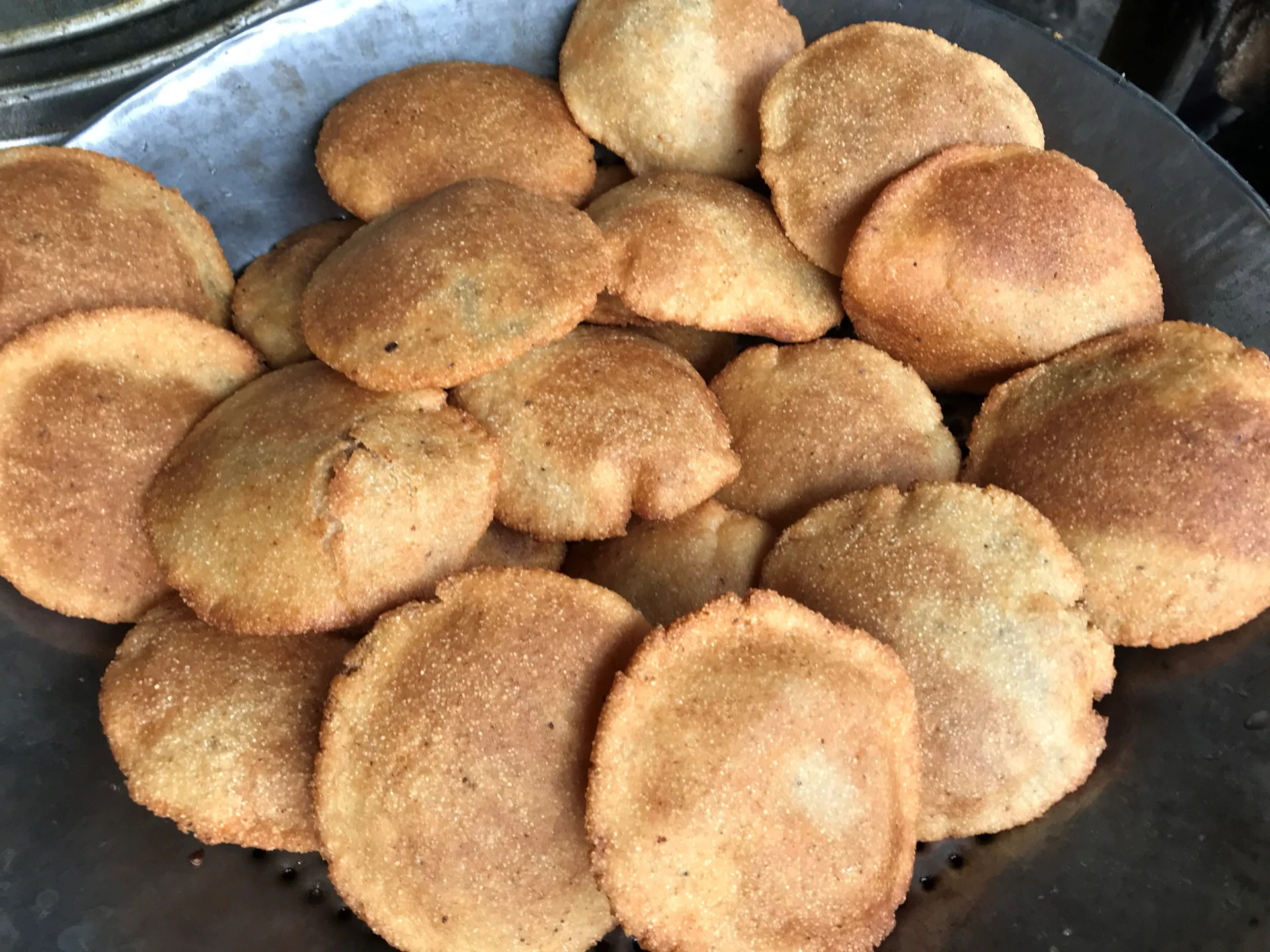
A Banarasi kachori is small (palm-sized), deep-fried, puffed hollow, and stuffed with a spiced urad-dal or moong-dal paste. It is closer to a Rajasthani khasta kachori than a Delhi-style stuffed kachori — texturally khasta (flaky), structurally hollow, and not particularly spicy on its own.
The complement is aloo-sabzi — a thin, runny potato curry with tomato, ginger, hing, and a clean Banarasi tempering of jeera, methi, and a small amount of haldi. The sabzi must be runny enough to soak through the kachori; thicker versions are a sign of a non-Banarasi vendor.
The second-tier accompaniment is jalebi. The Banarasi morning combo "kachori-sabzi + jalebi + chai" is the breakfast worth getting up for. Sweet and savoury at once is intentional.
Where to Eat It — Six Addresses
Ranked by Banarasi consensus, not by tourist visibility.
Ram Bhandar (Thatheri Bazaar)
The canonical address. Operating since the early 20th century, run by the same family. Open from ~6:30 AM; sold out by 10. Sit-down tables exist but the queue eats standing on the gali. ₹40–₹60 a plate. The benchmark all other kachoris are measured against.
Kashi Chaat Bhandar (Godowlia)
Famous for chaat in the evening, but their morning kachori-sabzi is in the same league as Ram Bhandar. ~6:30–10:30 AM service. ₹50–₹70. More tourist-aware than Ram Bhandar — English signage, slightly higher prices, comparable quality.
Madhur Milan (Lanka, near BHU)
The student favourite — sustained generations of BHU undergrads. Cheaper (₹30–₹40), thinner kachoris, the sabzi that's closest to "the way amma made it." Not the showpiece, but the most-eaten kachori in town.
Bansphatak unmarked stalls
The galis around Bansphatak (between Vishwanath and Dashashwamedh) have a half-dozen unsigned stalls that operate from 7 AM to ~9. No names, no menus, no English. Walk through and pick the one with the longest local queue. ₹25–₹40.
Pehlwan Lassi area kachoriwalas (Sigra)
For travellers staying around Sigra/Cantt — multiple kachori carts operate around Pehlwan Lassi corner from 6:30 AM. Less postcard, fully local. ₹30–₹50.
Deena Chaat Bhandar (Dashashwamedh)
Right at the ghat junction — convenient if you're coming off a sunrise boat ride. Less storied than Ram Bhandar but still unmistakably Banarasi. ₹50–₹70.
How to Order (And the Mistakes Tourists Make)
The right ask
Walk up. Hold up two fingers — "do plate" — or one — "ek plate." A plate is two kachoris with a generous helping of sabzi on a leaf. The vendor will hand you a leaf plate ("dona") with the kachori cut open so the sabzi runs in. Do not ask them to wrap or pack — kachori does not survive the walk; eat it standing where you bought it.
Add jalebi and chai separately
"Ek jalebi" — usually ₹20–₹30 for two pieces. "Ek chai" — ₹10–₹15 in a kullhad. Most kachori stalls don't do chai themselves; the chai cart is usually the next stall down. See Banarasi chai for the kullhad ritual.
The mistake to avoid
Ordering "khasta kachori without sabzi" — there is no such thing. The combination is the dish. A vendor confused enough to comply will give you a dry kachori that won't taste like anything. Same logic: don't ask for the sabzi on the side. It must run through the kachori.
If you can't take spice
Banarasi sabzi is mild compared to Delhi or Punjab equivalents — the heat is from a small pinch of red chilli, not from the masala. Tell the vendor "kam mirchi" (less chilli) and they will dial it down. Ginger-and-hing is the dominant flavour, not heat.
The Morning Walk — A Practical Itinerary
A guided way to taste your way through the kachori belt in one morning, walking only.
- 5:30 AM — sunrise from any ghat. Quick, then walk up.
- 6:45 AM — first plate at Ram Bhandar in Thatheri Bazaar. Two kachoris + jalebi + chai. ~₹100.
- 7:30 AM — walk through Vishwanath Gali toward Dashashwamedh. Browse Banarasi sari shops if open (most open at 10).
- 8:15 AM — second plate at Kashi Chaat Bhandar for comparison. Smaller portion ("ek plate") this time. ~₹60.
- 8:45 AM — kullhad chai at any of the half-dozen stalls between Godowlia and Dashashwamedh; sit on the steps and watch the city wake up.
- 9:15 AM — back to your hotel before the heat builds, or roll into the morning ghat-side meditation rhythm.
Total spend: ~₹160. Total ground covered: ~2 km. The two best kachoris in Banaras tasted side-by-side. This pairs neatly with the broader Varanasi street food guide for the afternoon-and-evening side of the picture.
Hygiene + Stomach Notes
Most travellers can eat at Ram Bhandar / Kashi Chaat Bhandar without trouble. The deeper-gali unmarked stalls vary; pick the one with the longest local queue (locals are picky, queues are signal). A few practical rules:
- Eat hot — kachori straight off the kadhai, sabzi from a still-bubbling pan. Do not eat from a plate that's been sitting.
- Watch the oil — clean stalls change the kadhai oil daily; old oil looks dark and smells off. If the kadhai oil is black, walk on.
- Skip raw garnishes if you're new in town — chopped onion, mint chutney straight from the bowl. The kachori-sabzi itself is fully cooked; the unsafe risk is the cold add-ons.
- Hydrate with bottled water, not the stall jug. The kullhad chai is fine — boiled, fresh clay.
What to Pair the Morning With
If you've eaten kachori at Ram Bhandar, the natural rest of the morning is right outside the door:
Banarasi Chai
The kullhad chai right outside is what completes the meal. The chai guide covers the houses worth a stop and the kullhad ritual.
After-Meal Paan
A morning paan is unconventional — most pan-eaters wait till after dinner — but the post-kachori meetha paan is one of the city's quiet pleasures. The paan guide.
Malaiyo (in season)
October–March, the rooftop-frozen saffron-cream dessert. If the morning is cold, find a malaiyo cart on the way back. The malaiyo guide.
The Wider Picture
For where kachori sits inside the broader Banarasi food culture — including the arts and the language — see food culture and traditional arts.
FAQ
Is kachori-sabzi vegetarian?
Yes — fully vegetarian, no onion, no garlic at most traditional stalls. The dal stuffing is urad or moong; the sabzi is potato-tomato.
What time does Ram Bhandar open?
Around 6:30 AM. Best between 7:00 and 9:00. They sell out by 10–10:30, sometimes earlier on weekends.
Can I order kachori for delivery via Swiggy/Zomato?
Some stalls list, most don't. Skip delivery — kachori loses its texture in 15 minutes; the sabzi soaks through and turns the kachori soggy. This is a stand-and-eat dish.
Is it spicy?
Mild by Indian standards. Banarasi cooking leans on hing, ginger, and methi rather than chilli. Kids handle it. Ask "kam mirchi" for less heat.
What about gluten / vegan diets?
Kachori is wheat flour and not gluten-free. The sabzi is dairy-free. The ghee finish on a fancier plate uses dairy ghee. Vegan with care: ask for "tel mein, ghee mat dalna" — oil only, no ghee.
Where can I learn to make Banarasi kachori?
A handful of cooking-class operators in the city run morning kachori-sabzi sessions; ask any hotel concierge or check the best time to visit page for seasonal class availability.