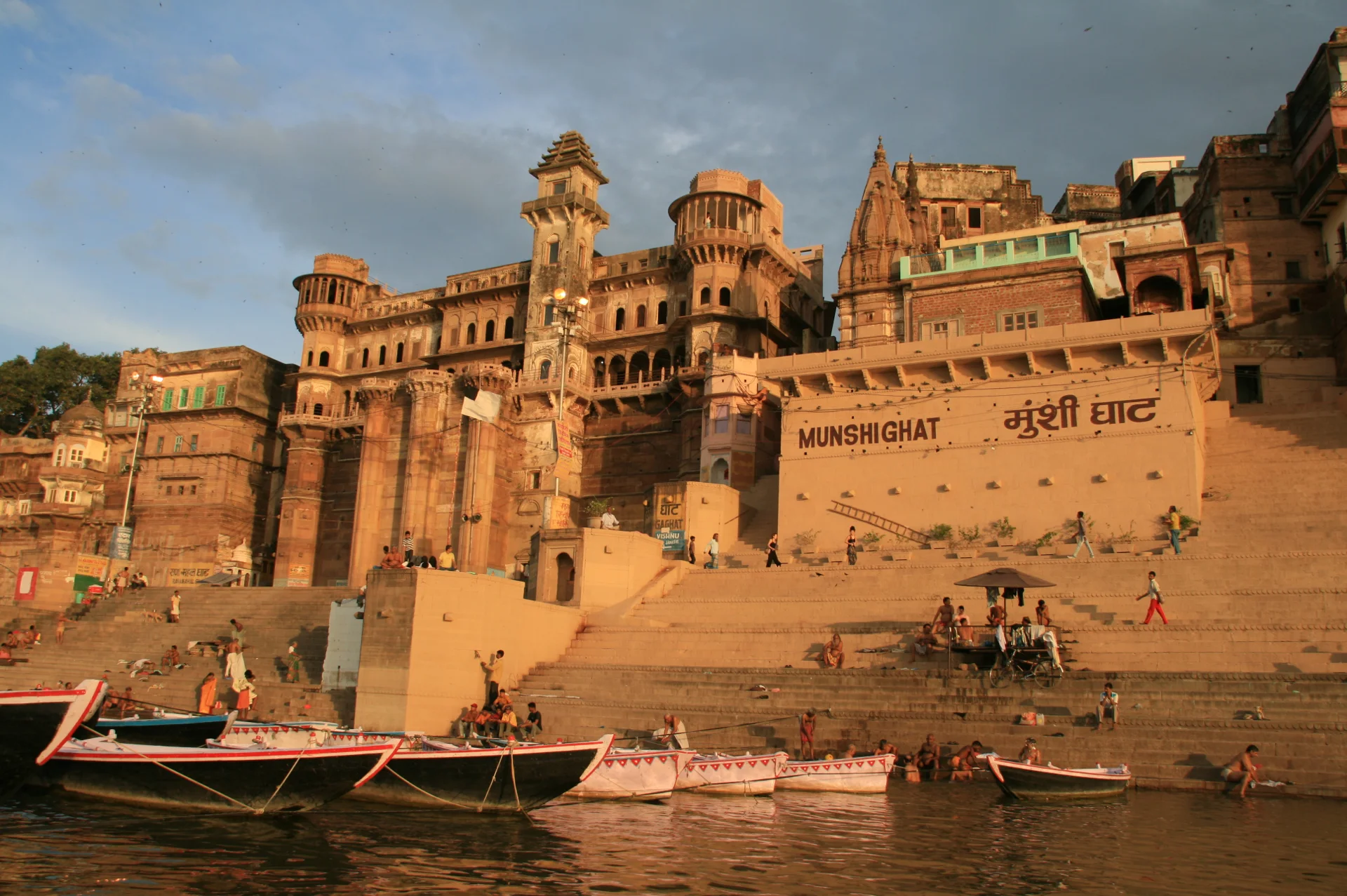
मुंशी घाट
Munshi Ghat
Munshi Ghat
Munshi Ghat (मुंशी घाट) is one of the 84 sacred ghats lining the western bank of the Ganga in Varanasi. Built by a Nagpur minister in 1812 — a heritage ghat with palace views. This ghat contributes to the extraordinary panorama that has made Varanasi's riverfront a UNESCO World Heritage candidate. Each ghat tells its own story — of royal patronage, spiritual significance, or daily life in the world's oldest living city. Visit as part of a morning boat ride or an evening walk along the riverfront to experience its unique character.
Significance
Every ghat in Varanasi carries layers of meaning — spiritual, historical, and social. Munshi Ghat is part of the six-kilometre crescent of stepped riverfront that constitutes the sacred geography of Kashi. Pilgrims, tourists, and locals share these ancient stones, creating a living tableau that has captivated visitors for millennia. The ghat system of Varanasi is unparalleled anywhere in the world. 🪔
Insider Tips
Quick Facts
🕐 Best Time
Sunrise for photography; evening for atmosphere
📍 How to Reach
Boat ride from any major ghat, or walk along the riverfront. Auto-rickshaws reach nearby main roads.
🏛️ Nearby
Ask locally for recommendations
Local Knowledge
Heritage Views
Enjoy palace views from this historic ghat built in 1812.
Riverfront Walk
Experience as part of an evening walk along the Ganga.
Spiritual Layers
Part of Kashi's sacred geography with deep historical meaning.