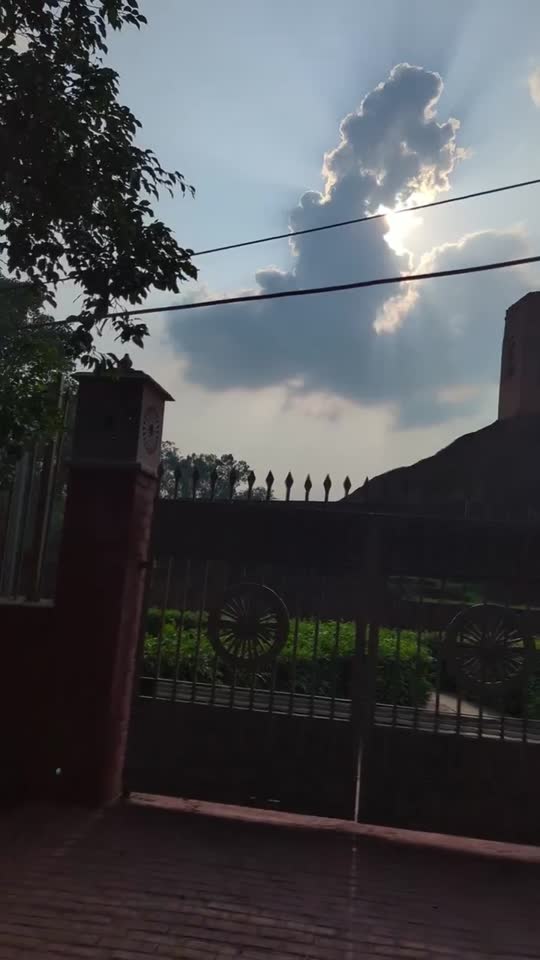
धामेख स्तूप
Jhalak · 10-second clips
1 clip · tap one to watch
Before you go
The story
Rising from the Deer Park at Sarnath, Dhamekh Stupa marks the spot where the Buddha first taught the Dharma. Fifteen centuries of brick and carved stone stand here, still circled by monks and pilgrims.
Buddhists call this ground Rishipatana or Mrigadava, the Deer Park. It is one of the four great pilgrimage sites linked to the Buddha's life, alongside Lumbini, Bodh Gaya and Kushinagar. According to tradition, Dhamekh stands where he set the Wheel of the Dharma in motion. That event is the Dharmachakra Pravartana, the first sermon, delivered to five former companions.
Shortly after his enlightenment at Bodh Gaya, the Buddha walked to this Deer Park. Here he taught the Four Noble Truths and the Eightfold Path to five ascetics, who became the first members of the Sangha.
Emperor Ashoka raised monuments across Sarnath, including the famous lion pillar. An earlier stupa on this spot is generally linked to his era.
The stupa took its present form under Gupta-period builders. They gave it a solid stone lower drum wrapped in a band of exquisite floral, geometric and swastika carving.
The Chinese pilgrim-scholar Xuanzang described Sarnath as a thriving monastic centre with many monks. His account later helped archaeologists identify the ruins.
Invading armies sacked Sarnath's monasteries, and the site slowly fell silent. Dhamekh's sheer bulk helped it outlast most of its neighbours.
Alexander Cunningham sank a shaft through the stupa and found an inscribed slab carrying a Buddhist creed. His work began the modern rediscovery of Sarnath.
Dhamekh dominates the excavated Deer Park. Its lower third is stone and the upper body is weathered brick, softened by grass and centuries of rain. Up close, the Gupta carving is the real treasure. Look for delicate lotus scrolls, birds and interlocking geometric patterns that are still crisp in places.
The mood is hushed and devotional. Tibetan, Thai, Sri Lankan, Japanese and Indian pilgrims walk slow clockwise circuits. Some chant softly, some prostrate, and many sit cross-legged on the lawns in meditation. Prayer flags flutter nearby, and on quiet mornings you hear birdsong instead of traffic. It feels a world away from the bustle of Dashashwamedh.
Walk the full circle at eye level. The finest surviving Gupta ornament faces the lawns on the less crowded sides.
Just nearby lie the foundations of the Dharmarajika Stupa. It was dismantled for bricks in the late 18th century, which is a sobering contrast to Dhamekh's survival.
The base of Ashoka's pillar stands within the same complex. Its lion capital, now India's national emblem, is displayed in the nearby Sarnath Museum.
This modern temple is a short walk away. It is known for its Japanese murals of the Buddha's life and the Bodhi tree sapling in its grounds.
Within the ASI-protected Sarnath excavated site. A ticket is typically required, with separate rates for Indian and foreign visitors.
Generally open from around sunrise to sunset. Check locally, as hours can vary.
Modest clothing covering shoulders and knees is appreciated at this active pilgrimage site.
Deer Park, Sarnath, roughly 10 km north-east of central Varanasi.
Getting there
From visitors
Rate Dhamekh Stupa
No reviews of Dhamekh Stupa yet. Be the first.
Explore around
Dhamekh Stupa (धामेख स्तूप) is a cultural site in Sarnath, Varanasi.
Also listed in Sarnath: 159 shops, 100 schools, 59 hotels, 58 clinics, 52 religious sites, 36 hospitals.
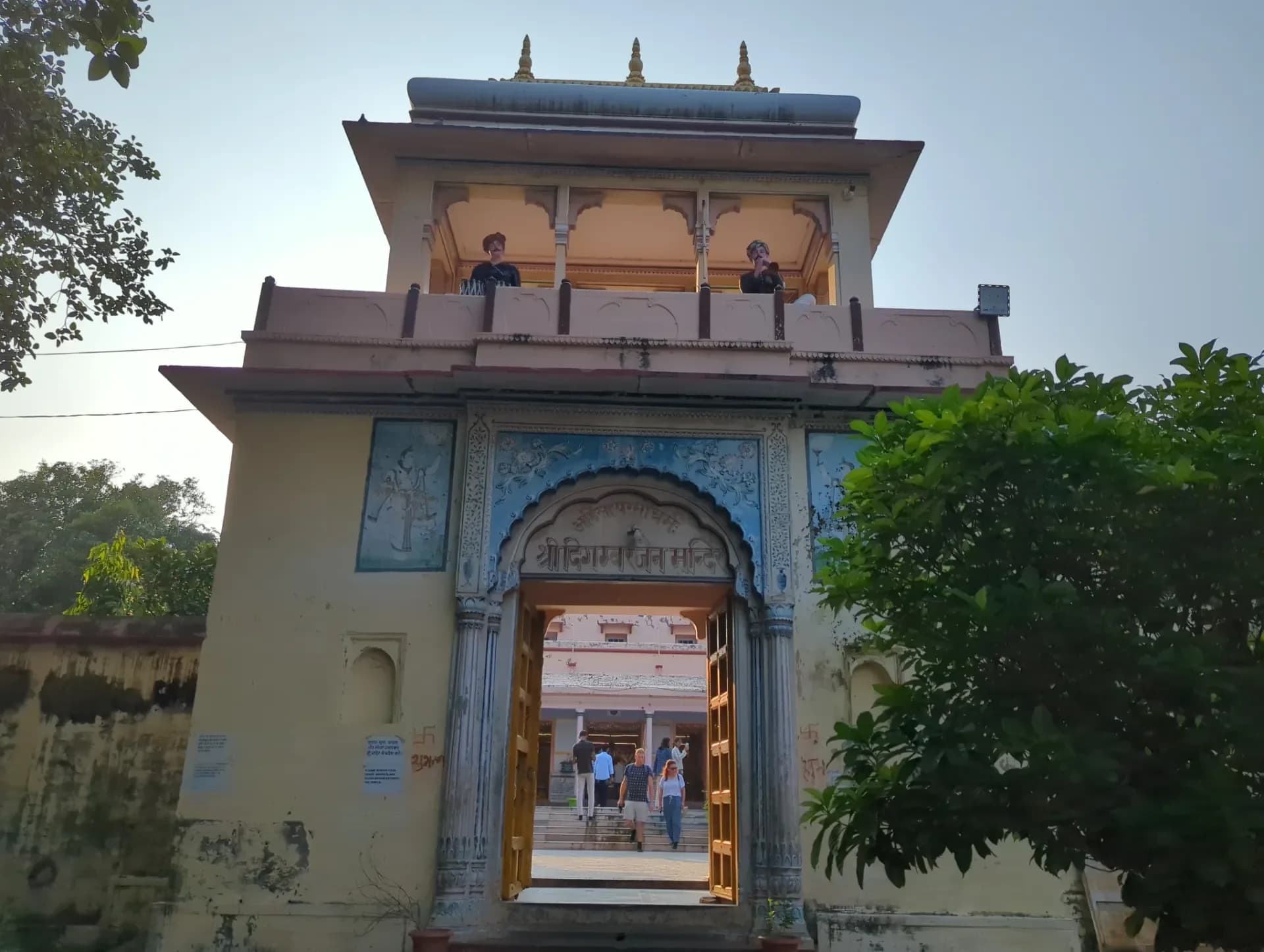
Shri Digambar Jain Mandir
श्री दिगंबर जैन मंदिर
Religious site, Sarnath, right next door
दिगांबर जैन मंदिर
Religious site, 70 m away
HOTEL IN VARANASI | HOTELS IN VARANASI | HOTEL IN SARNATH | Varanasi hotels
वाराणसी में होटल | वाराणसी के होटल | सारनाथ में होटल | वाराणसी के होटल
Hotel, Sarnath, 70 m away
Attraction
आकर्षण
Entertainment, 100 m away