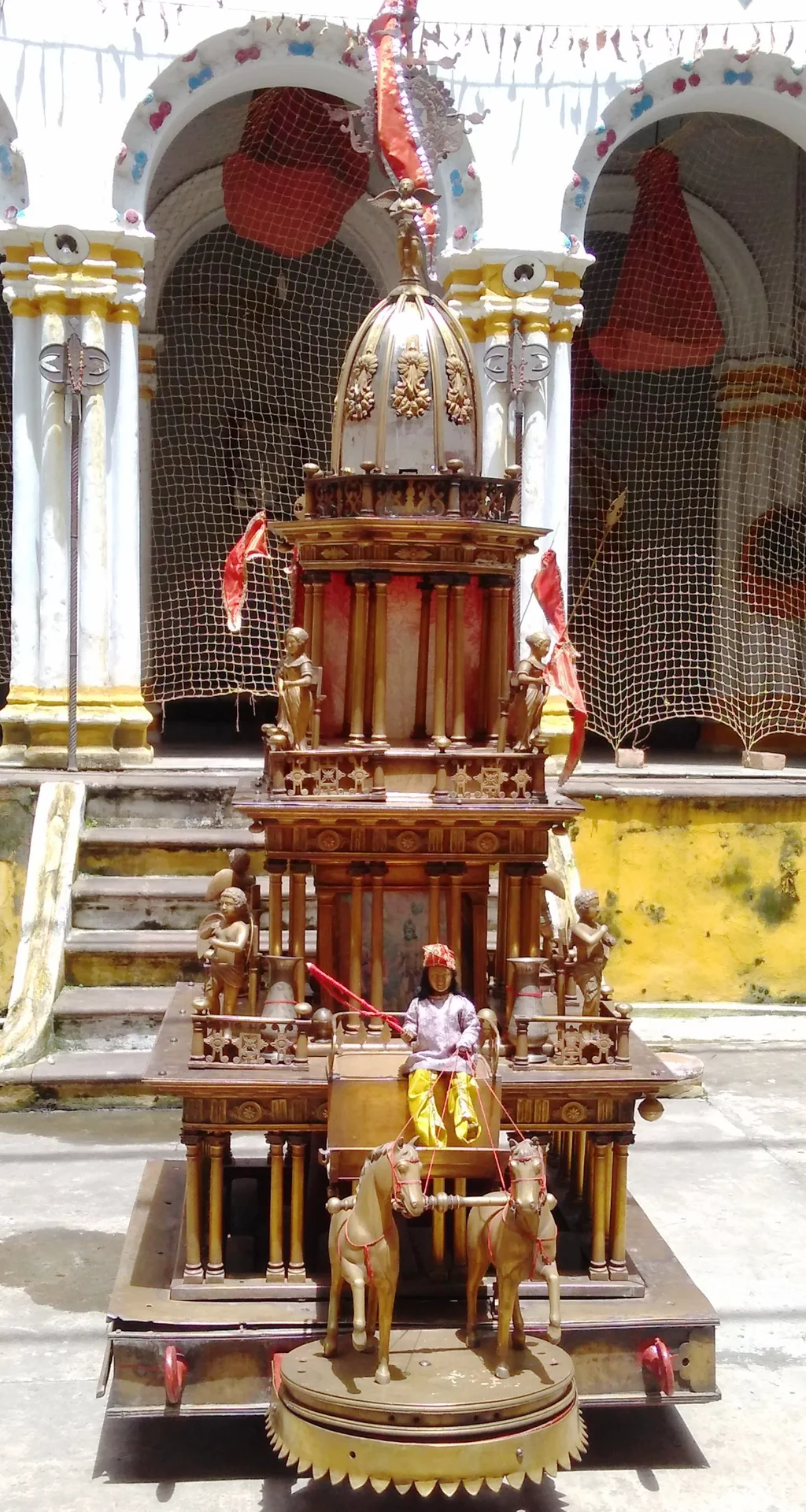
रथ यात्रा वाराणसी: रथ यात्रा मार्ग और परंपराएँ
Rath Yatra Varanasi: Chariot Festival Routes & Traditions
Rath Yatra Varanasi: Chariot Festival Routes & Traditions
Witness Lord Jagannath’s grand procession winding through Varanasi’s sacred lanes and ghats.
Rath Yatra in Banaras blends devotion with centuries-old ritual. Chariots roll from historic temples near Lanka and Assi toward Dashashwamedh Ghat, drawing thousands who line the narrow galis of the old city.
At a Glance
Where to Witness Rath Yatra
Key stops and neighbourhoods that host the chariots each year.
Jagannath Temple, Lanka
Starting point of the main procession near BHU campus.
Assi Ghat
Evening aarti and first halt after leaving the temple.
Dashashwamedh Ghat
Grand culmination with river blessings and crowds.
Old City Galis
Devotees pull ropes through narrow lanes near Kashi Vishwanath.
Historical Timeline
First recorded yatra
Procession noted during early medieval temple patronage in Kashi.
Mughal era continuity
Local rulers protect the festival despite regional conflicts.
Public expansion
Procession grows to include neighbourhoods around Bhelupur and Sigra.
City-wide celebration
Route now links Assi to Dashashwamedh with police coordination.
Tips from people who live here
Best time
Arrive in June–July during Ashadha month; early morning pull is less crowded.
How to reach
Walk from Assi Ghat or take a boat to Dashashwamedh; avoid roads once chariots start.
What to bring
Light cotton clothes, water bottle, and a small mat for sitting along the ghat steps.
Respect local customs
Stay off the chariot ropes unless invited; women traditionally walk behind the procession.
Frequently asked questions
When is Rath Yatra celebrated in Varanasi?
The main event falls on the second day of the bright fortnight of Ashadha, usually late June or early July.
Which route does the chariot follow?
Chariots travel from the Jagannath Temple in Lanka via Assi Ghat, through old city lanes, and end at Dashashwamedh Ghat.
Is the festival open to all visitors?
Yes, the procession is public; however, space near the chariots is reserved for traditional pullers.
Are there any restrictions during the yatra?
Traffic is diverted; photography of deities is allowed but flash is discouraged near the chariots.
Can I participate in pulling the ropes?
Only authorised groups pull; spectators are welcome to walk alongside and sing bhajans.