सारनाथ बुद्ध पूर्णिमा 2026: तिथि, अनुष्ठान और कैसे पहुँचें
Sarnath Buddha Purnima 2026: Date, Rituals & How to Reach
Sarnath Buddha Purnima 2026
Buddha Purnima 2026 falls on Monday, May 11 — the full moon of the Hindu month of Vaishakh. Sarnath, 13 km from Varanasi, is where the Buddha delivered his first sermon and is one of the four holiest pilgrimage sites in Buddhism. The day draws Buddhist monks and pilgrims from Sri Lanka, Thailand, Japan, Myanmar, Vietnam, Korea, and across Asia.
Why Sarnath on Buddha Purnima
In the Deer Park at Isipatana — today's Sarnath — the Buddha taught the Four Noble Truths to his five former companions. That sermon, the Dhammacakkappavattana Sutta, set in motion the Buddhist tradition. Buddha Purnima commemorates three moments together: the Buddha's birth at Lumbini, his enlightenment at Bodh Gaya, and his death at Kushinagar — all believed to have occurred on the same full-moon day.
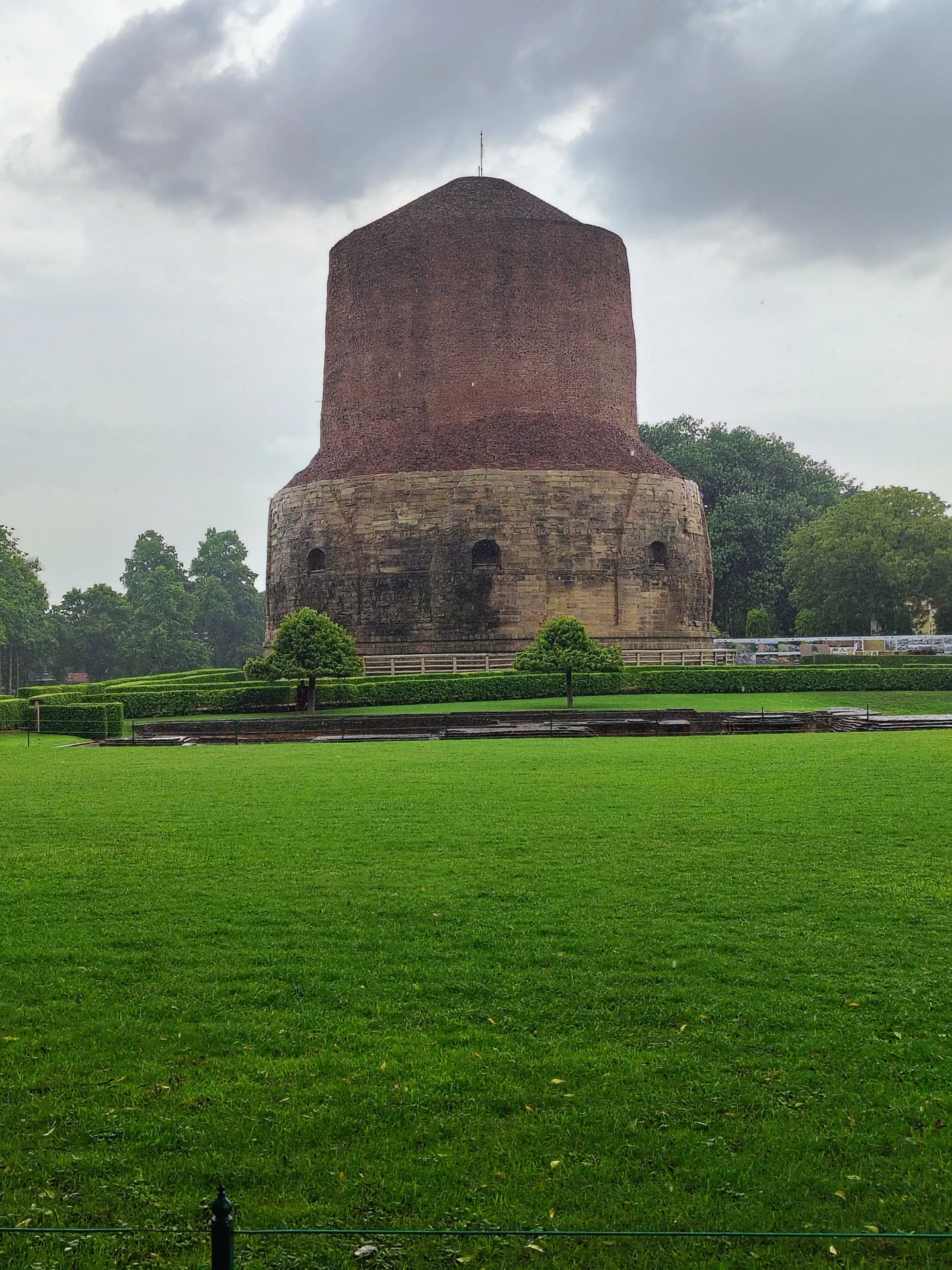
Sarnath earns its place because the first sermon happened here. The Dhamekh Stupa, built in the 5th century CE on the site of an earlier Mauryan pillar, marks the spot. On Buddha Purnima the stupa becomes the centre of a procession that begins at the Mulagandha Kuti Vihara and circumambulates the ruins.
Schedule of Events (Typical)
The 2026 schedule is published by the Maha Bodhi Society of India (Sarnath branch) closer to the date. Based on prior years, expect this rhythm:
Pre-Dawn (4:30–6:00 AM)
Quiet meditation in the deer park. Monks from the Mulagandha Kuti Vihara open the day with chanting. The grounds are at their most photogenic in this light, and crowds are smallest.
Morning Procession (7:00–9:00 AM)
A bilingual Pali-and-Hindi procession begins at the Mulagandha Kuti Vihara and walks to the Dhamekh Stupa. Monks lead in saffron, ochre, and maroon robes by tradition; lay pilgrims follow with lotus offerings.
Stupa Circumambulation (9:00–11:00 AM)
Pilgrims circumambulate the Dhamekh Stupa clockwise three or seven times, often in silence. This is the day's most sacred public observance — walk slowly, do not point feet at the stupa, and keep your phone away unless photography is explicitly permitted.
Community Meal (Mid-Day)
Many of the international monasteries (Thai, Japanese, Tibetan, Sri Lankan) host community meals open to pilgrims. Dress modestly, remove shoes at the entrance, and queue with the line — do not jump.
Afternoon Dhamma Talks (2:00–5:00 PM)
Public dhamma talks at the Mulagandha Kuti Vihara, frequently bilingual (English + Hindi or English + a south-Asian language depending on the year's host order). Free entry; arrive early to find a seat.
Evening Lamp Lighting (Dusk)
Earthen-lamp lighting around the stupa and across the deer park. Quieter than Dev Deepawali on the ghats, but visually similar in spirit. Stay until full dark to see it complete.
How to Reach Sarnath
Sarnath is 13 km north-east of central Varanasi (Godowlia / Dashashwamedh area). Plan an early start on Buddha Purnima — traffic spikes after 8 AM as buses arrive.
By Cab / Auto
30–45 minutes from Dashashwamedh. Cab ₹400–₹600 round-trip if you ask the driver to wait. Auto-rickshaw ₹200–₹350 one-way. Ola/Uber both work; prebook for the return so you don't get stuck.
By Public Bus
UPSRTC and private buses run Varanasi–Sarnath continuously. ₹20–₹40, 45–60 minutes. Crowded on Buddha Purnima — leave by 5:30 AM if you want a seat.
By Train
Sarnath has its own railway station (Sarnath, code BSV) on the Varanasi–Mau line, but services are limited. Practical only if you happen to be at Cantt station early.
Coming from Elsewhere
From Lal Bahadur Shastri International Airport (Babatpur, VNS), Sarnath is 35 km — 60–75 minutes by cab. Arriving the night before and overnighting in Sarnath itself is the calmest option for Buddha Purnima morning.
Practical context for getting around the city: how to reach Varanasi covers airport, rail, and road in detail.
What to Expect On the Ground
A Buddha Purnima crowd at Sarnath is large but contemplative. The atmosphere is closer to a meditation retreat than a festival.
Crowds and timing
Expect 30,000–50,000 visitors across the day. Mornings are the busiest; mid-afternoon is the quietest pocket between the procession and the dhamma talks. Pre-dawn and post-dusk are visually the best.
Etiquette at the Dhamekh Stupa
Walk clockwise. Do not climb the stupa or any of the ruins. Do not point your feet at the stupa or any seated monk — sit cross-legged or kneel if you are resting. Photography is generally permitted in open areas but not always inside the Mulagandha Kuti Vihara — look for the signage.
Dress code
Cover shoulders and knees. Light, breathable fabrics in muted colours. White is traditional for Buddha Purnima. Remove shoes at every shrine entrance.
What to bring
Water, hat, sunscreen — Varanasi May temperatures sit at 38–42°C. A small offering (white flowers, candles) is welcome but not required. A clean handkerchief or scarf for sitting on the ground.
What not to bring
Leather (a traditional avoidance at Buddhist shrines, though enforcement is gentle), loud-shutter cameras, drones (prohibited), incense not approved by monks. Do not bring food into the stupa enclosure.
Nearby — Make a Day of It
If you have a full day, Sarnath pairs naturally with one of these:
Sarnath Archaeological Museum
Houses the original Lion Capital of Ashoka (the source of the Indian national emblem) and exquisite Gupta-period Buddha sculptures. Closed Fridays. ₹25 entry. Allow 60–90 minutes — see the deeper write-up on the Sarnath pillar page.
Mulagandha Kuti Vihara
The 1931 Maha Bodhi Society temple, with frescoes by the Japanese painter Kosetsu Nosu depicting the Buddha's life. Walk the deer park behind it — same deer descended from those that tradition says heard the first sermon.
Kashi Vishwanath
Pair Sarnath with the Kashi Vishwanath Temple in Varanasi proper for a complete spiritual day — Buddhism's first sermon site in the morning, Shiva's most sacred Jyotirlinga in the evening.
Day-Trip Logistics
Our Sarnath day trip from Varanasi guide has the half-day, full-day, and combined-with-Ramnagar-Fort itineraries.
Best Time to Arrive (And When to Skip)
Buddha Purnima is in May. May in Varanasi is genuinely hot — daytime highs of 38–42°C and humidity climbing toward the monsoon. Pace yourself; this is not a casual sightseeing day.
Prefer pre-dawn (4:30–7:00 AM) and post-dusk (after 6:30 PM) for the visual moments. Mid-day is for indoor activities — the museum, the Mulagandha Kuti Vihara interior, a community meal at one of the international monasteries.
If you are planning your full Varanasi trip around festival timing, see the best time to visit Varanasi for a season-by-season comparison and how May stacks up against the cooler Oct–Mar window.
Adjacent Festivals Worth Knowing
If Buddha Purnima fits your trip, you might also be interested in Banaras's other major festivals:
- Dev Deepawali — November, the festival of a million lamps on the ghats. Visually the most spectacular event in the Banaras calendar.
- Holi — March, but Banaras plays Holi differently across three distinct celebrations (Masaan, Rang Barse, traditional). One of India's most unique Holi experiences.
- Maha Shivaratri — February/March, the night of Shiva. Kashi Vishwanath stays open through the night.
FAQ
Is Buddha Purnima 2026 a public holiday in Uttar Pradesh?
Yes — Buddha Purnima is a gazetted holiday across India. Government offices, banks, and most schools close. Tourist sites stay open; in fact this is when Sarnath is at its busiest.
Do I need to be Buddhist to attend?
No. Sarnath welcomes all visitors. Observe the etiquette in §What to Expect and you are welcome at the procession, the stupa circumambulation, and the dhamma talks.
Can I attend the community meals?
Most monastery community meals are open to anyone who comes respectfully. Dress modestly, remove shoes, and queue. You may be asked to make a small voluntary contribution.
Is Sarnath safe at night?
Sarnath is a small, well-policed pilgrimage area. The lamp-lighting evening crowd is friendly. Cab back to Varanasi rather than walking after dark.
Where can I stay near Sarnath?
A handful of guesthouses operate inside Sarnath itself — Thai, Sri Lankan, and Burmese-temple accommodations are the most common. Most international visitors stay in Varanasi proper. See the hotels near the ghats guide for ghat-side options.