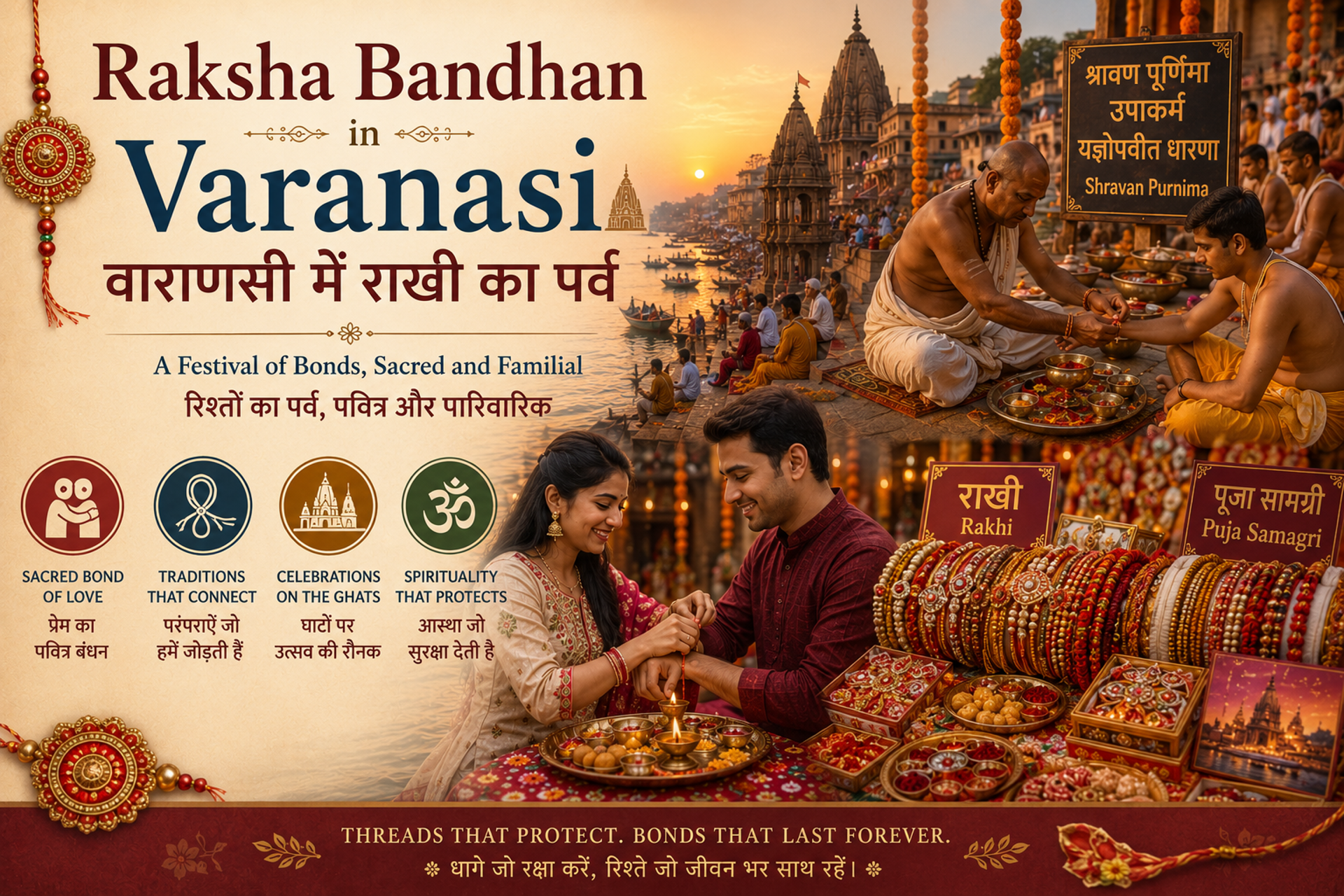
Raksha Bandhan in Varanasi 2026: The Rakhi Bond, Shravan Purnima & the Sacred-Thread Rituals of Kashi
Last updated: 14 July 2026
Raksha Bandhan in Varanasi: A Festival of Bonds, Sacred and Familial
Few festivals capture the warmth of Indian family life as tenderly as Raksha Bandhan, the day when a sister ties a rakhi — a thread of protection and love — upon her brother’s wrist. In Varanasi, however, the day carries a second, older layer of meaning, for it falls on Shravan Purnima, the full-moon day of the holy month of Shravan, when the ghats fill with Brahmins performing the ancient ritual of renewing their sacred thread. To spend Raksha Bandhan in Kashi is to witness two kinds of sacred bond at once: the loving tie between siblings, and the timeless tie between a person, their tradition, and the eternal river.
This guide explains the meaning of Raksha Bandhan, its special expression in Varanasi through the rituals of Shravan Purnima, the customs of the day, the bustling festival markets, and everything a visitor needs to experience it with understanding and respect.
When Is Raksha Bandhan 2026?
In 2026, Raksha Bandhan falls on Thursday, 27 August, on the full moon (Purnima) that closes the sacred month of Shravan. It arrives near the end of the Sawan season described in our guide to Sawan at Kashi Vishwanath, making it a fitting and auspicious finale to weeks of monsoon devotion in the city of Shiva.
The Meaning of the Rakhi
At its heart, Raksha Bandhan — literally “the bond of protection” — celebrates the relationship between brothers and sisters. The sister ties the rakhi on her brother’s wrist, applies a tilak to his forehead, and offers sweets, praying for his long life and happiness; in return, the brother pledges to protect and support her, and offers a gift. Yet the festival’s spirit reaches well beyond blood siblings. Rakhis are tied between cousins and friends, by soldiers and priests, and as a symbol of goodwill and solidarity across communities. It is, above all, a celebration of the promise to stand by one another.
The Kashi Connection: Shravan Purnima on the Ghats
What makes Raksha Bandhan in Varanasi so distinctive is its coincidence with Shravan Purnima, one of the most significant days in the traditional Hindu calendar. On this morning, the ghats of the Ganga become the setting for a great and ancient ceremony. Hundreds of Brahmins gather at the river to perform Upakarma (also known as Shravani or Rishi Tarpan) — the annual ritual of changing the yajnopavita or sacred thread (janeu). After a purifying dip in the holy river, offerings are made to the ancient sages (rishis), and the old thread is respectfully replaced with a new one, symbolising a renewal of one’s vows of learning, discipline and duty.
For the visitor, watching this ceremony unfold along the ghats at dawn — rows of devotees in the river, the murmur of Vedic mantras, the smoke of ritual fires rising into the monsoon air — is a profound and moving experience. It is a reminder that in Kashi, the city of learning, the deepest festival of the day is not only about family, but about the unbroken thread of knowledge passed from teacher to student across the centuries.
Kashi, City of Sanskrit and Scholarship
Varanasi has been the beating heart of Sanskrit learning and priestly tradition for millennia. The renewal of the sacred thread on Shravan Purnima is therefore especially meaningful here, where so many families trace their lineage through generations of scholars, priests and teachers. The day connects naturally to the wider intellectual and spiritual heritage of the city, which you can explore further in our Varanasi culture guide.
The Rituals and Customs of the Day
- Tying the rakhi: The central ritual — a sister ties the decorated thread on her brother’s wrist, marks his forehead with a tilak, and feeds him a sweet.
- Gifts and blessings: Brothers offer gifts and, more importantly, a vow of lifelong care and protection.
- Family gatherings: Siblings travel across cities to be together; homes fill with sweets, new clothes and shared meals.
- The sacred dip: Many take a holy bath in the Ganga at dawn on Shravan Purnima, considered especially auspicious.
- The sacred thread ceremony: Brahmin families perform Upakarma, changing the janeu and honouring the rishis.
Festival Markets: Rakhis, Sweets and Banarasi Craft
In the week before Raksha Bandhan, the lanes and bazaars of Varanasi burst into colour. Stalls overflow with rakhis of every design — from simple sacred threads to elaborate, sparkling creations — while sweet shops work through the night preparing barfi, laddoo and seasonal specialities. The city’s famous craft traditions come to the fore, and it is a wonderful time to admire the silk and zari work that Banaras is known for. If you are shopping for a special gift, the legendary Banarasi saree makes a treasured Raksha Bandhan present for a sister. And no festival visit is complete without sampling the city’s celebrated street food and sweets.
Where and How to Experience Raksha Bandhan in Varanasi
The ghats at dawn: To witness the Shravan Purnima rituals and the sacred-thread ceremony, reach the main ghats such as Dashashwamedh and Assi early in the morning. A boat ride offers a serene vantage on the riverfront devotions.
Kashi Vishwanath and the temples: As the culminating full moon of Shravan, this is a deeply auspicious day for darshan at Kashi Vishwanath and the Shiva temples of the city.
The evening Aarti: Close the day with the majestic Ganga Aarti at Dashashwamedh Ghat, when the full moon rises over the river.
In homes and neighbourhoods: The rakhi-tying itself is a family affair, but the festive warmth spills into every lane, sweet shop and market of the old city.
Practical Tips for Visitors
- Arrive early for the ghats: The sacred-thread rituals take place in the morning. Dawn also offers the softest light and the most peaceful atmosphere.
- Be respectful at rituals: The Upakarma ceremony is a solemn religious observance. Observe quietly, keep a respectful distance, and ask before photographing individuals.
- Prepare for monsoon and crowds: Late August can still bring rain, and the markets are busy. Carry an umbrella and keep belongings secure.
- Join in gently: If a local family invites you to tie or receive a rakhi, it is a heartfelt gesture of friendship — accept it warmly.
- Hire a knowledgeable guide to explain the layered meanings of Shravan Purnima and to help you navigate the busy festival lanes.
Two Threads, One Spirit
Raksha Bandhan in Varanasi is a festival of threads — the rakhi that binds a sister to her brother, and the sacred thread that binds a person to their heritage and their teachers. Both speak of the same thing: the promise to protect, to remember and to remain faithful to those we love and to the traditions that shape us. To be in Kashi on Shravan Purnima is to feel these bonds made visible — in the river at dawn, in the tying of a thread, in the sweets pressed into a traveller’s hand by a stranger who insists you share the joy of the day.
Plan Your Raksha Bandhan Visit
Raksha Bandhan 2026 is on 27 August, the full moon that closes Shravan. Combine it with the wider Sawan season, a sunrise walk along the ghats, and darshan at Kashi Vishwanath for a rich and meaningful monsoon journey in the eternal city.
Frequently Asked Questions
Why is Raksha Bandhan special in Varanasi?
Because it coincides with Shravan Purnima, when Brahmins perform the sacred-thread ceremony (Upakarma) on the ghats. Visitors can experience both the family festival of the rakhi and this ancient riverside ritual on the same day.
Can tourists watch the sacred-thread ceremony?
Yes, respectfully and from a suitable distance. It is a public but solemn ritual performed on the ghats in the morning; quiet, unobtrusive observation is welcome.
What gifts are traditional for Raksha Bandhan?
Sisters tie rakhis and offer sweets; brothers give gifts in return — clothes, sweets or keepsakes. In Varanasi, silk and Banarasi textiles make especially cherished presents.
The Deeper Story of the Thread
The idea of a protective thread runs like a bright cord through the long history of Indian culture, and Raksha Bandhan gathers many of these strands into a single day. In the older tradition, the raksha sutra — a thread tied by a priest or an elder while chanting a prayer of protection — was offered as a shield against misfortune and a blessing for a new undertaking. Over centuries, this sacred gesture flowered into the beloved festival of siblings we know today, without ever losing its original note of blessing and safeguard. In a city as steeped in ritual as Varanasi, both meanings live side by side: the priest on the ghat who ties a protective thread at the close of the sacred-thread ceremony, and the sister at home who ties one on her brother’s wrist, are performing, in their different ways, the same ancient act of love and protection.
This layering of meaning is part of what makes festivals in Kashi so rewarding to experience. Nothing here is only one thing. A thread is a toy of colour and glitter in a child’s hand, a solemn vow in a priest’s, and a lifelong promise between siblings — all on the same luminous full-moon morning. For the thoughtful traveller, Raksha Bandhan in Varanasi is an invitation to see how the grand and the intimate, the scriptural and the domestic, are forever woven together in the fabric of this extraordinary city. It is a day that rewards early rising, quiet observation, and an open heart, and it leaves most visitors with a deeper feeling for the bonds — of family, faith and community — that hold a culture together.