वाराणसी संस्कृति गाइड: संगीत, बुनाई, आध्यात्म, त्यौहार और भोजन
Varanasi Culture Guide: Music, Weaving, Spirituality, Festivals & Food
Varanasi Culture
Varanasi is one of the few cities where culture is not curated — it is lived. A tabla bol learnt at four. A Banarasi sari woven on a frame older than the weaver. An aarti chanted at the same ghat where it has been chanted for centuries. This guide is the hub: five intersecting traditions — classical music, silk weaving, ghat-side spirituality, the festival year, and the food street — and where to encounter each on the ground.
Culture in Season: Autumn & Winter 2026
The monsoon has passed and the holy month of Shravan closed on 28 August 2026, so the cultural calendar now turns to the densest stretch of the Varanasi year. Pitru Paksha runs from 26 September to 10 October 2026, ending on Sarva Pitru Amavasya — a fortnight when families gather at the ghats before dawn for tarpan and pind daan, and the riverfront belongs to ritual rather than sightseeing. Sharadiya Navratri follows from 11 to 19 October, with Dussehra on 20 October. Across the river, the month-long Ramnagar Ramleela plays out in Ramnagar’s streets and fort courtyards through late September and October, staged by lamplight and traditionally performed without amplification — the single best window to watch the city’s living theatre tradition. Nag Nathaiya at Tulsi Ghat closes the Ramleela season.
Then comes the light. Diwali falls on Sunday 8 November 2026 (Dhanteras 6 November, Govardhan Puja 9 November, Bhai Dooj 10 November), and fifteen days later Dev Deepawali on Tuesday 24 November 2026 turns the ghats into one continuous stepped wall of earthen lamps — the evening when this guide’s five traditions converge most completely: aarti, music, crowds, weaving worn at its best, and food stalls running past midnight. If you can make only one trip for culture, late October to late November is the window. The weather is dry and mild, the silk looms are working ahead of the wedding season, and there is live music somewhere in the city most nights. See the full festival calendar to time a visit precisely.
Getting between these events may also be easier soon. The Kashi ropeway — India’s first urban public-transport ropeway, running roughly 3.75 km from Varanasi Cantt railway station to Godowlia Chowk via Kashi Vidyapeeth and Rathyatra — has been opening in phases, with an announced end-to-end fare of about ₹50 and a ride of roughly 15 minutes, against the 40 minutes or more the same trip can take by road in festival traffic. Confirm current running status locally before planning around it, and see how to reach Varanasi for the rest of the arrival picture.
1. Music — The Banaras Gharanas
The Banaras Gharana is one of India's most distinctive schools of Hindustani classical music. There are actually two — a vocal gharana (khayal and thumri) and a tabla gharana — and both shape the city's evening soundscape.
Banaras Tabla Gharana
The tabla gharana descends from Pandit Ram Sahay (early 19th century), whose lineage gave India some of its greatest tabla players — Pandit Kishan Maharaj, Pandit Samta Prasad, Pandit Anokhelal Mishra. The Banaras style is known for its open, resonant tone and its distinctive use of the bāyāñ (the bass drum), with relā compositions named after the river itself.
Banaras Vocal Gharana
The vocal gharana is rooted in the thumri-dadra-tappa tradition — the lighter, more emotive side of Hindustani classical, born in the courts of late-Mughal and Awadhi nawabs. Girija Devi, Siddheshwari Devi, Rasoolan Bai — these voices defined what thumri sounds like in the modern imagination.
Where to encounter it now
- Sankat Mochan Sangeet Samaroh (April) — the city's largest classical festival, held at Sankat Mochan Hanuman temple. Free entry, performances run past midnight.
- Dhrupad Mela (Feb–Mar, Tulsi Ghat) — the older, austere predecessor to khayal. Tansen-tradition dhrupad sung at sunrise on the ghat.
- Subah-e-Banaras (daily, Assi Ghat, sunrise) — a city-supported daily concert that begins with classical-instrumental and moves through to the sunrise aarti.
- Banaras Hindu University Faculty of Performing Arts — frequent free recitals open to the public; check the BHU Faculty schedule.
For the deeper history, schools, and a list of the city's living masters, see the dedicated Varanasi music heritage page and the Banaras Gharana deep-dive.
2. Weaving — Banarasi Silk
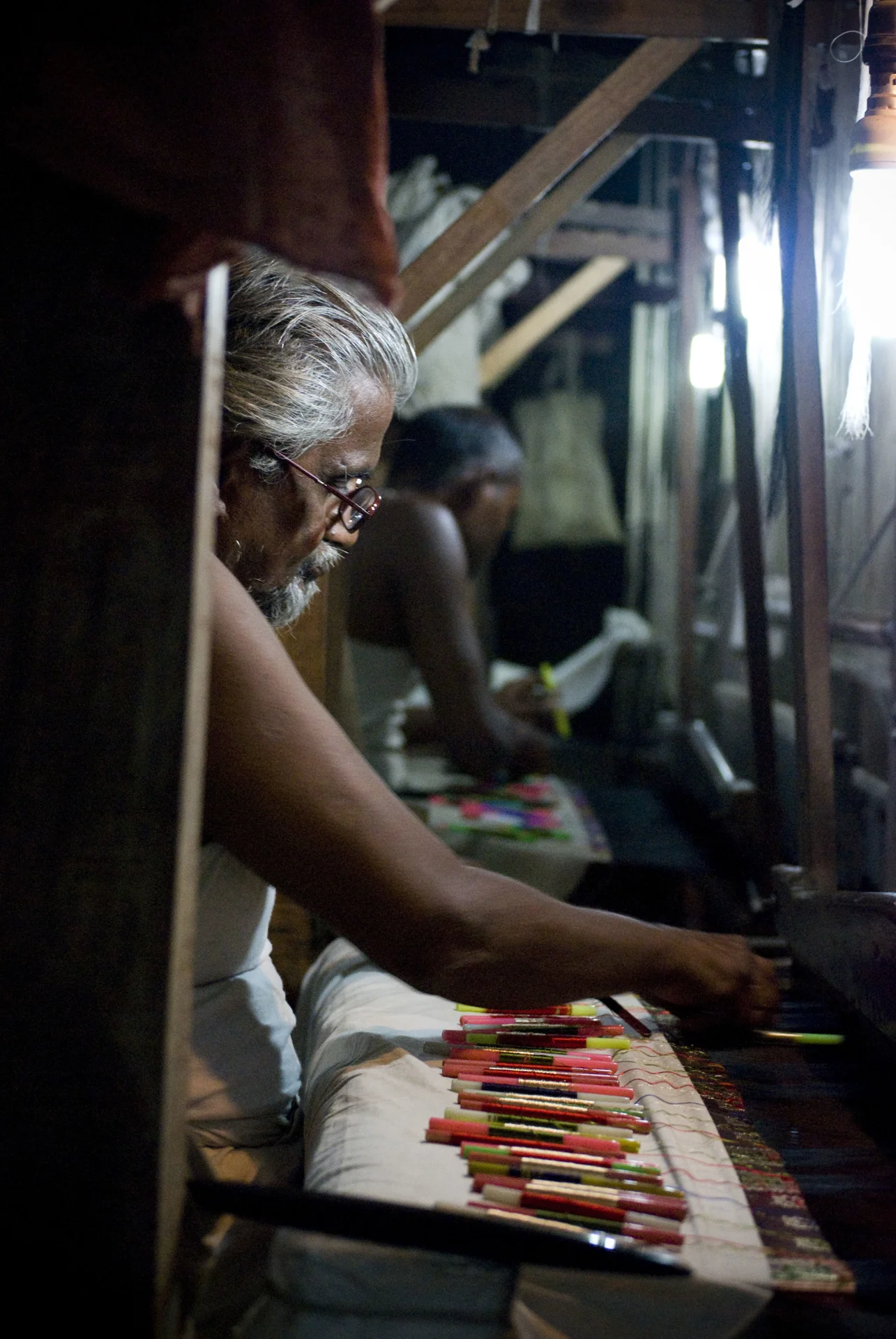
Brocade silk weaving has been a Varanasi industry since the Mughal era, when Persian motifs met Hindu mythological iconography on the same loom. A genuine Banarasi sari can take fifteen days to six months to weave by hand and is the only Indian sari with a GI tag (Geographical Indication, 2009) protecting the term "Banarasi."
What makes it Banarasi
- Kadhwa weave — each motif woven in, not embroidered. Detect it on the reverse: motifs are clean both sides.
- Zari — silver-or-gold thread, traditionally drawn from real metal. Today most weavers use tested-quality (kasab) zari; the deep-luxury weaves still use real silver.
- Six classical motifs — paisley (kalka), floral (jal), shikargah (hunting scene), kairi (mango), foliated bel border, and the Mughal-derived ambi.
- Four weave families — Kanjivaram-style heavy brocades, lighter Tanchois, the airy Cutwork (Kadwa), and the silk-cotton Kora-by-Cotton hybrids.
Where to see and buy
The weaving cluster sits in Lallapura, Madanpura, and Saraiya — old Muslim weaver neighbourhoods where most production still happens at home looms. For shopping, the bazaars at Vishwanath Gali, Chowk, and Thatheri Bazaar have showrooms; for a workshop visit, ask your hotel concierge to set up a Lallapura visit (₹500–₹1000 typical hosting fee, includes chai).
The dedicated Banarasi sari guide covers the saree-buying playbook (how to spot a power-loom fake, pricing tiers, motif glossary). For the practical shopping itinerary, see silk sarees shopping in Varanasi.
3. Spirituality — The Ghats and Beyond
Varanasi's spirituality is plural. Hinduism's most concentrated tirtha sits across the river from Buddhism's first sermon, with active Jain, Sikh, and Sufi sites woven through. The ghats are where this layering becomes visible at the same hour.
The Hindu Anchor — Kashi Vishwanath
One of twelve Jyotirlingas — the holiest Shiva shrines in Hindu cosmology. The 2021 corridor expansion connected the temple to the Ganga at Lalita Ghat for the first time in centuries. Read the Kashi Vishwanath guide for darshan timings and the corridor history.
The Buddhist Anchor — Sarnath
Where the Buddha gave his first sermon. 13 km from central Varanasi. Most ancient monastic centre in north India after the Buddha's lifetime. See the Sarnath pillar for the deep history.
The Daily Rhythm — Ganga Aarti
Every evening at Dashashwamedh Ghat, since records were kept. The seven priests, the five-flame deepak, the conch — see the Ganga aarti guide for timings, viewing spots, and what each offering means.
The Cremation Ghats
Manikarnika and Harishchandra. Open continuously — the only two ghats in the world where the funeral pyre has burned for centuries without interruption. Read the Manikarnika page before visiting; the etiquette here is non-negotiable.
The Morning Practice
Dawn at any ghat — meditation, yoga, the day's first dip. Quietest at Tulsi or Assi; most photogenic at Dashashwamedh.
The Hanuman Devotion
Sankat Mochan Hanuman Mandir — Tulsidas-era temple to Hanuman. Tuesdays and Saturdays are the major darshan days; the late-evening kirtan there is some of the best devotional music in the city.
4. The Festival Year
Banaras has a festival rhythm thicker than most Indian cities. Plan a trip around one and the city changes shape entirely.
Dev Deepawali (November)
The festival of a million lamps on the ghats, fifteen days after Diwali. Visually the most spectacular night of the Banaras year. Read the guide →
Holi (March)
Banaras plays Holi differently — three distinct celebrations including Masaan Holi at Manikarnika with cremation ash. Read the guide →
Maha Shivaratri (Feb–Mar)
The night of Shiva. Kashi Vishwanath stays open through the night; the city's ghats fill with all-night vigils. Read the guide →
Buddha Purnima (May)
At Sarnath — procession at the Dhamekh Stupa, dhamma talks at Mulagandha Kuti Vihara, evening lamp-lighting. Read the 2026 guide →
Ramnagar Ramleela (Sept–Oct)
The 31-night Ramleela across Ramnagar's open-air mohallas. UNESCO Intangible Heritage candidate. The most important Ramleela tradition still performed.
Nag Nathaiya (Oct–Nov)
One-night Krishna-and-Kaliya re-enactment on the Ganga at Tulsi Ghat. Centuries-old, deeply local — almost no tourists.
The full year is on the festivals of Varanasi index.
5. Food — The Street Itself
Banarasi food is street food. The breakfast kachori at Ram Bhandar, the sunset chaat at Kashi Chaat Bhandar, the after-dinner paan at any panwadi corner — eating Banaras is a tour of small neighbourhood institutions, not restaurants.
The morning hour
Kachori-sabzi is the Banarasi breakfast. Hot puffed kachoris with a runny aloo-sabzi, on a leaf plate, eaten standing — see street food guide for the canonical addresses (Ram Bhandar, Kashi Chaat Bhandar's morning service, the unmarked stalls in Bansphatak).
Chai and paan
The mornings start with kullhad chai — clay-pot tea — and the days end with banarasi paan. Paan is its own ritual; the right after-dinner paan is folded with rose-petal preserve, betel-nut, fennel, and a dab of mukhwas. See banarasi paan for the story and banarasi chai for the chai houses worth a stop.
Winter sweets — malaiyo
From Karthik (October) through Holi, malaiyo appears at street stalls in old-city — frothy saffron-flavoured milk-cream made overnight on rooftop terraces from dew-collected milk-foam. See malaiyo for the where-and-when.
The full picture
For the integrated view of Banarasi food alongside the city's traditional arts, see food culture and traditional arts of Varanasi.
6. Language and Literature
Banaras has been a literary capital of north India for at least eight centuries. Tulsidas wrote much of the Ramcharitmanas here; Kabir lived and died in the city; Premchand's Hindi modernism took shape in the streets around BHU.
The dialects
The streets speak Banarasi Hindi — a Bhojpuri-inflected register with its own slang and a fondness for compounding the polite "Bhola" / "Bhauji" form. You'll hear it in markets and at the ghats; the literary register is closer to standard Hindi.
The institutions
- Banaras Hindu University — founded 1916 by Madan Mohan Malviya. Its faculty and library define modern Indian Sanskrit and Hindi scholarship.
- Sampurnanand Sanskrit University — the oldest Sanskrit university in India (1791); the global anchor for traditional Sanskrit learning.
- Bharat Kala Bhavan (BHU) — one of India's finest museum collections of Indian art, miniature painting, and textiles. Often missed by tourists; absolutely worth a half-day.
How to Encounter All Five — In One Trip
A culturally rich Varanasi trip threads all five strands rather than ticking them off. A practical seven-day weave:
- Day 1 — Spirituality. Morning ghat walk + dawn aarti at any ghat; afternoon Kashi Vishwanath; evening Ganga aarti at Dashashwamedh.
- Day 2 — Buddhism. Day trip to Sarnath; evening Subah-e-Banaras (yes, even though "Subah" means morning — the city-arts programme runs both ends of the day at Assi).
- Day 3 — Music. Dhrupad Mela tickets if in season; otherwise BHU Faculty of Performing Arts schedule + an evening at Sankat Mochan.
- Day 4 — Weaving. Lallapura workshop visit; Vishwanath Gali shopping; an evening Banarasi-Hindi conversation at any old-city paan shop.
- Day 5 — Food. Morning kachori-sabzi crawl; mid-day chaat; rooftop malaiyo (in season) or dahi-baras and sundown paan.
- Day 6 — Festivals. Time the trip around one — Dev Deepawali in Nov, Holi in Mar, Buddha Purnima in May.
- Day 7 — Quieter. Tulsi Ghat sunrise; BHU's Bharat Kala Bhavan; afternoon at Sankat Mochan; an evening boat ride back along the ghats.
For the practical day-by-day with timings and addresses, see the 3-day itinerary (compresses days 1–3 of the above) or the longer Varanasi travel guide.